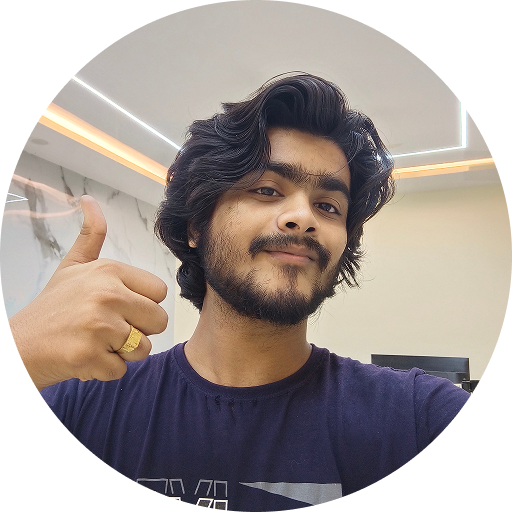
Who I Am
A little story about where I started, how I found my way into software, and what I'm building today.
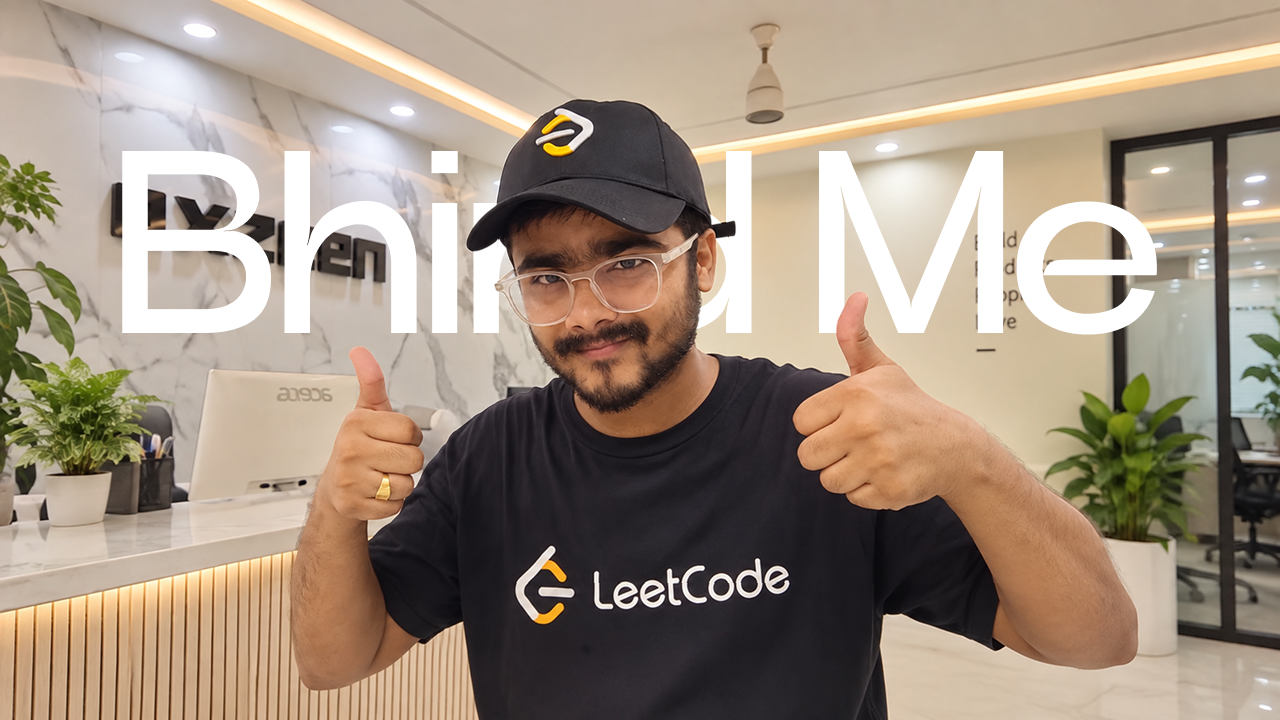
Who I Am
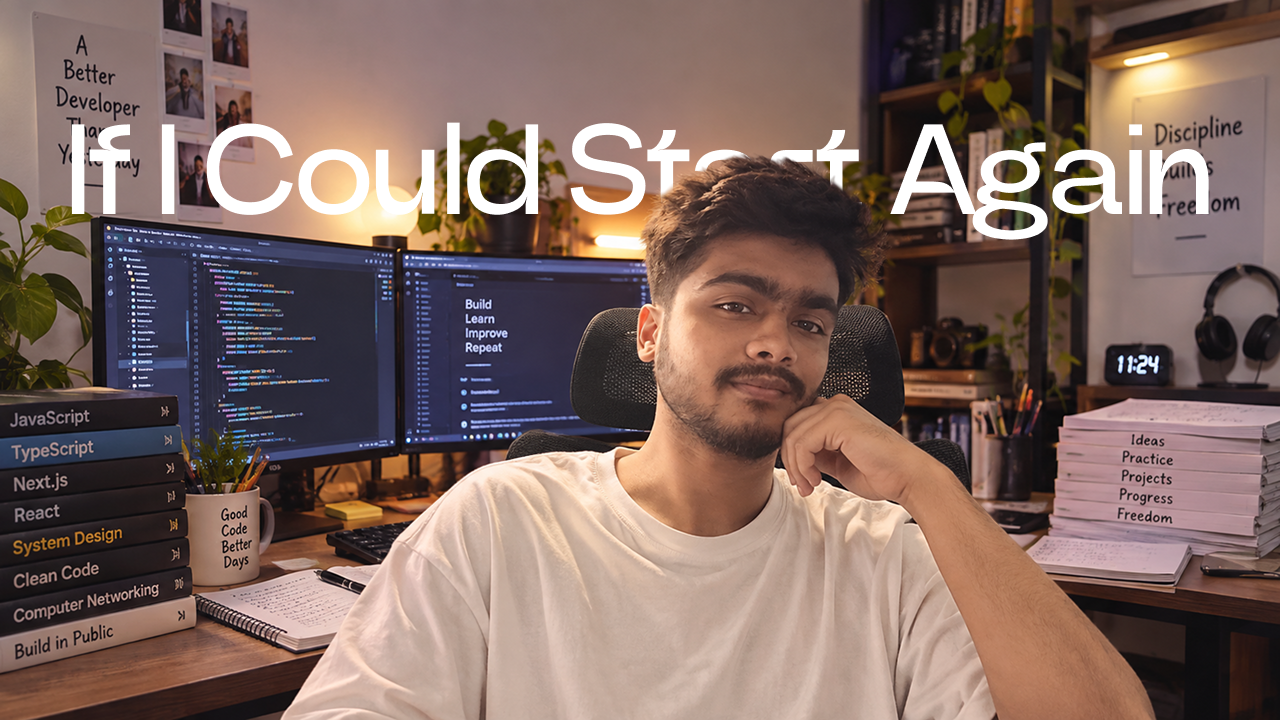
My name is Md Aarzoo Islam. Some people know me as Aarzoo Islam, some simply call me Aarzoo, and online I often use the name “withaarzoo.” I’m a software engineer, founder, and creator. I build software, start products, work on ideas that interest me, and spend a lot of time learning how things work.
But “software engineer” is only one part of who I am.
The story behind Md Aarzoo Islam is not a straight line. I did not grow up in a family of programmers, engineers, or people working in technology. I come from a small semi-urban city in West Bengal, and there was no ready-made roadmap for becoming a developer. I had to create my own path, one small step at a time.
Today, when someone searches for “Who is Md Aarzoo Islam?”, “Who is Aarzoo Islam?”, “Who is Aarzoo?”, “Who is the founder of oxzeen?”, or “Who is the founder of dgisight?”, the simple answer is this: I’m someone who started with curiosity, taught himself how to build things, worked with real people and businesses, gained professional software engineering experience, and eventually decided to spend more of his time building products of his own.
But the longer answer is much more personal.
Where It Started
My interest in technology started from something very simple.
I was watching Doraemon.
Like many kids, I was fascinated by the futuristic gadgets, robots, inventions, and the idea that technology could do things that seemed impossible. I became curious about robotics and started wondering how machines worked, how people created them, and how technology could make things happen.
That curiosity stayed with me.
Around 2012, that interest slowly turned into an interest in coding.
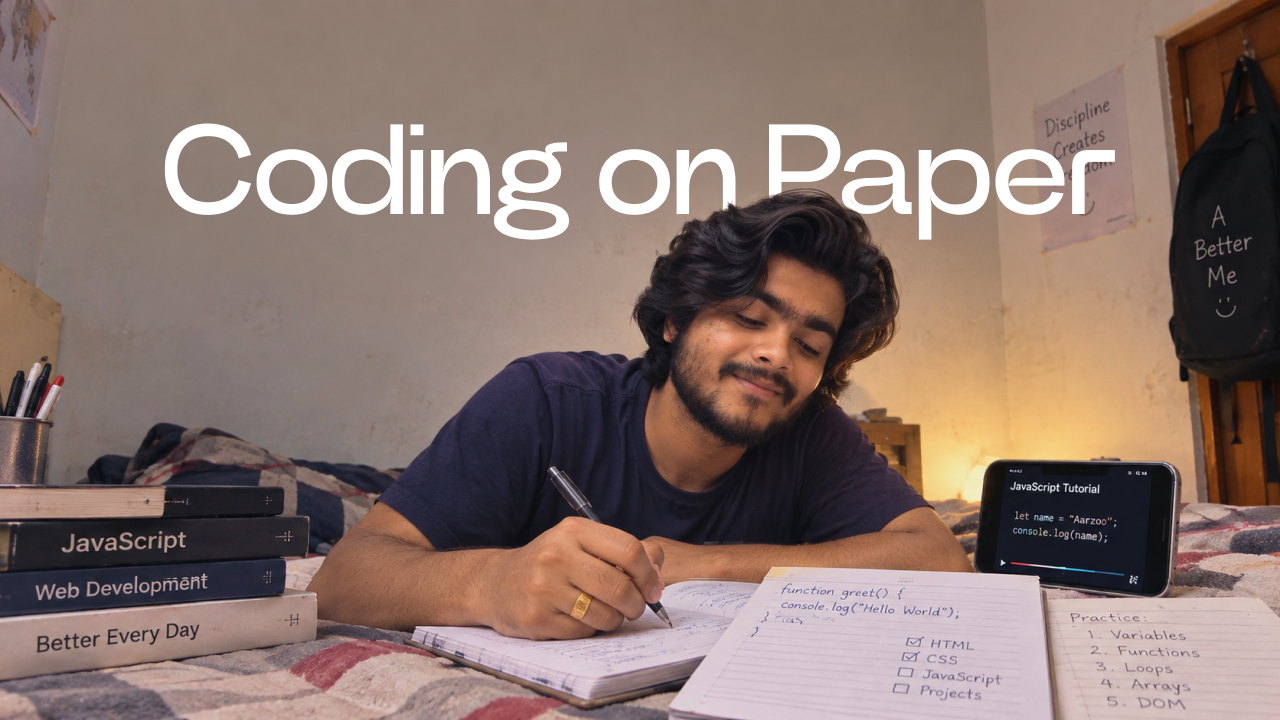
At that time, I did not have a computer of my own. I couldn't just open a code editor, write some code, run it, see an error, and try again. Things were much simpler than that. Sometimes I would literally write syntax on paper with a pen just to understand how code was structured.
Looking back, it sounds strange. For me, it was normal.
I was simply curious.
I wanted to know what variables were, what conditions did, how loops worked, why one line of code affected another line, and how something written by a human could eventually make a machine do something.
I started learning from free resources, especially YouTube tutorials and whatever material I could find online. There was no paid roadmap, no personal mentor, and no one in my family who could sit beside me and explain software development.
I learned by searching.
I learned by trying.
I learned by making mistakes.
And most importantly, I learned by being curious enough to try one more time.
That habit stayed with me.
I Was Never Following a Traditional Path
My formal education was normal in some ways, but my journey into software was not.
I studied at Beldanga Netaji Park during my early school years and later attended Beldanga C.R.G.S High School for my school education. I eventually joined Lovely Professional University in 2021 to study Bachelor of Technology in Computer Engineering.
But I left college after about a year for personal reasons.
That was not the end of my education.
In many ways, it was when my self-learning became even more important.
I continued studying computer science, programming, software development, web development, and other areas through online learning and practical work. I spent a lot of time learning things that a final-year computer engineering student would normally encounter throughout a degree: programming, databases, web technologies, software engineering concepts, problem solving, development tools, and much more.
I was no longer learning because a syllabus told me what to learn.
I was learning because I wanted to understand it.
That difference mattered.
When you learn something because you genuinely want to understand it, you start asking different questions. Instead of only asking, “Will this be on an exam?”, you start asking, “Why does this work?”, “What happens behind the scenes?”, “How would this work in a real application?”, and “How would I build this myself?”
Those questions became a big part of how I learned software.
Learning to Build Instead of Just Learning to Code
At some point, I realized that knowing programming syntax was not enough.
You can learn JavaScript.
You can learn React.
You can learn databases.
You can watch hundreds of tutorials.
But eventually you have to build something real.
So I started building.
Some projects were tiny. Some were experiments. Some were made just to understand a concept. Some were built for tutorials. And some became real products or real work for real people.
Building changed the way I understood technology.
When you build something for yourself, you can make almost any decision you want.
When you build something for someone else, things become different.
There is a real person waiting for it.
There is a real problem to solve.
There are real requirements.
There are things that break.
There are things that need to be changed.
There are deadlines.
There are conversations.
There are trade-offs.
That is where software development started becoming more real to me.
dgisight
Around 2022, I started my own software development agency, dgisight.
It started as something I wanted to build for myself, but it quickly became a way for me to work directly with clients and create software for real businesses.
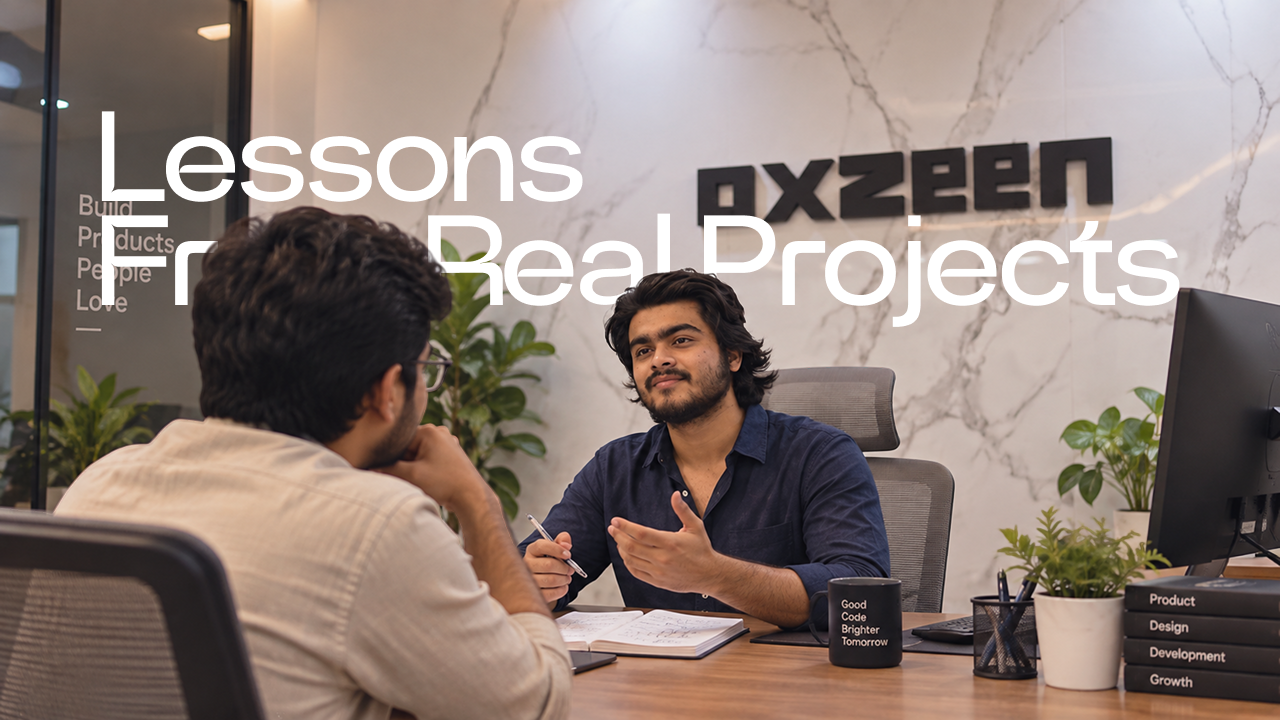
Over roughly the following year, I worked with more than 25+ clients across different industries. Some were local businesses. Some were from other parts of the country. I worked on websites, software, applications, and digital products for different kinds of organizations, including hospitals, schools, and personal businesses.
For me, dgisight was much more than an agency.
It was a huge learning experience.
I had to understand what a client actually wanted, even when they did not know exactly how to explain it. I had to turn ideas into interfaces, interfaces into applications, and applications into something people could actually use.
I had to learn how to communicate.
I had to learn how to estimate work.
I had to learn how to handle changes.
I had to learn how to solve problems when there was no tutorial explaining the exact problem in front of me.
And I had to become comfortable with responsibility.
When you build something for a real client, you cannot simply say, “It works on my machine.”
Someone is going to use it.
That experience helped shape the way I think about software today.
I don't just think about code.
I think about the person using it.
Wipro
During this phase of my journey, I also applied to a lot of companies and startups on my own.
I remember applying to more than 40+ companies around 2022 and 2023.
There were many applications.
There were many unknowns.
There were also many moments when nothing seemed to happen.
But I kept applying.
Eventually, I got the opportunity to work with Wipro and completed a four-month internship remotely.
That experience gave me exposure to a more professional software development environment. Until then, a lot of my learning had happened independently or through client work. Working in a professional environment showed me a different side of engineering.
There is a difference between building something alone and working as part of an engineering process.
You start thinking more about collaboration, maintainability, communication, processes, and how software is developed when multiple people are involved.
It was another step in my journey.
Adobe
Later, in 2023, I got the opportunity to work at Adobe as a Senior Software Engineer.
I worked remotely for around seven months.
My work there gave me the chance to think about software from a more engineering-focused perspective, especially around backend development, services, APIs, application logic, and solving problems in a professional environment.
Working as a software engineer at a company like Adobe was a very different experience from running my own projects.
At dgisight, I had to think like a builder, business owner, developer, and sometimes even a product person.
At Adobe, I had the chance to focus much more closely on software engineering inside a larger organization.
Both experiences taught me different things.
One taught me how to build for people.
The other taught me how engineering works inside a professional software organization.
Eventually, I decided to leave that role and put more focus on building my own things.
That decision was not because I stopped enjoying software engineering.
It was because I realized that I wanted to spend more of my time creating products, experimenting with ideas, and building something of my own.
From dgisight to oxzeen
As I continued building, I started thinking beyond a single agency.
That led to oxzeen.
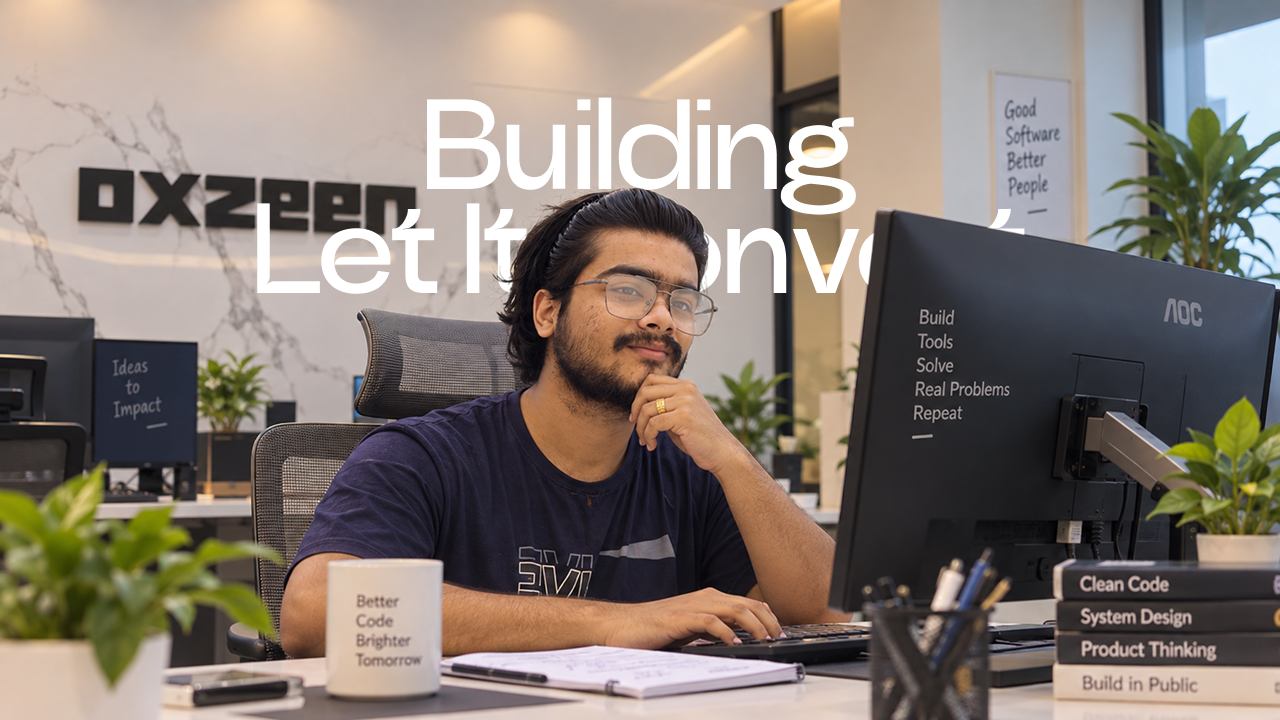
oxzeen is the parent brand under which I want to build and organize multiple products, businesses, and ideas.
dgisight is now part of oxzeen, with its own presence under dgisight.oxzeen.com.
This is an important part of how I see my work now.
I don't want to build just one thing.
I want to explore different ideas, create useful software, and build products that can stand on their own.
One of those products is Let It Convert.
Let It Convert
Let It Convert is a free online toolkit focused on useful file and media tools.
The idea behind it is simple: build practical tools that people can open in a browser and use without unnecessary complexity.
The project includes things like file conversion, image compression, PDF tools, image utilities, and media-related tools, with more planned for the future.
For me, Let It Convert is not just another project on a portfolio.
It represents something I enjoy doing: taking an idea, turning it into software, putting it online, and gradually improving it.
That process is what I enjoy most.
I like the moment when something moves from being an idea in my head to something another person can actually open and use.
CodeWithAarzoo
Alongside building products, I also create content.
I started my YouTube channel, CodeWithAarzoo, around 2019.
The channel is focused mainly on web development, coding tutorials, projects, and learning through building. Over time, it became another part of my journey.
Teaching has also helped me learn.
When you explain something to another person, you notice gaps in your own understanding.
When you build a tutorial from scratch, you have to understand the steps clearly.
When someone follows your code and gets an error, you learn to think about problems from another person's point of view.
That is one reason I enjoy creating developer content.
I don't see CodeWithAarzoo as something separate from my work as a developer. It is part of it.
Building, learning, explaining, and sharing are all connected for me.
I Still Code Every Day
Even after years of building software and working professionally as an engineer, I still spend time solving programming problems.
I regularly work on LeetCode and GeeksforGeeks problems.
Not because I believe solving coding problems is the only way to become a good software engineer.
It isn't.
But problem solving keeps my thinking sharp.
It makes me slow down, understand the problem properly, look for patterns, consider different approaches, and think about efficiency.
Sometimes the problem is difficult.
Sometimes the solution is obvious after five minutes.
Sometimes I write something completely wrong and have to start again.
That is part of learning.
I don't think learning software development ever really ends. There is always another system to understand, another technology to explore, another bug to fix, or another idea to build.
More Than a Job Title
Today, I could introduce myself by saying:
I'm a software engineer.
Or:
I'm the founder of oxzeen.
Or:
I'm the founder of dgisight.
Or:
I'm the creator behind CodeWithAarzoo.
All of these are true.
But none of them tells the whole story.
I'm also someone who started coding because a cartoon made me curious about robotics.
I'm someone who learned without having a traditional technology background around me.
I'm someone who started by writing syntax on paper.
I'm someone who learned from free resources and spent years figuring things out alone.
I'm someone who left college and continued learning anyway.
I'm someone who applied to dozens of companies without knowing where any of those applications would lead.
I'm someone who built software for real clients before having years of professional experience.
I'm someone who worked as a software engineer and then chose to return to building my own products.
I'm someone who is still learning.
That last part is probably the most important.
Why I Keep Building
I like building because it gives ideas a place to exist.
An idea in your head is just an idea.
Once you build it, it becomes something you can look at, test, improve, break, rebuild, and share.
That process never gets old for me.
Sometimes the project becomes successful.
Sometimes it doesn't.
Sometimes the original idea changes completely.
Sometimes a project teaches you more than you expected.
I have learned that building is not always about creating the next big thing.
Sometimes it is just about solving one problem properly.
Sometimes it is about making something simpler.
Sometimes it is about learning a technology.
Sometimes it is about helping a client.
And sometimes it is simply about proving to yourself that you can take an idea from zero to something real.
That mindset is what keeps me moving.
What I'm Building Now
Today, most of my work is connected to software, products, and learning.
I'm building oxzeen and working on products that live under it. dgisight continues as part of that ecosystem. Let It Convert is one of the products I'm building, and I have more ideas that I want to turn into real products in the future.
I also continue creating content through CodeWithAarzoo.
I keep solving programming problems.
I keep exploring new technologies.
I keep building websites and applications.
And I keep learning.
Some days are productive.
Some days are messy.
Some ideas work.
Some don't.
That is normal.
I'm not trying to create a story where everything worked perfectly from the beginning.
It didn't.
My journey has been a mix of curiosity, mistakes, experiments, opportunities, setbacks, work, and a lot of learning.
So, Who Is Md Aarzoo Islam?
If you came here searching for “Who is Md Aarzoo Islam?”, “Who is Aarzoo Islam?”, “Who is Aarzoo?”, or looking for the person behind oxzeen, dgisight, Let It Convert, or CodeWithAarzoo, this is probably the best answer I can give.
I'm a self-taught software engineer, founder, and creator from West Bengal who started coding out of curiosity and kept going.
I build software.
I work on products.
I create content.
I solve problems.
I learn by doing.
And I am still figuring things out.
I don't think a person's story can be completely explained by their degree, job title, company, or list of projects.
Those things are part of the story, but they are not the whole story.
For me, the real story is the curiosity that started it all and the decision to keep following that curiosity year after year.
From watching Doraemon and becoming interested in robotics, to writing code on paper, to teaching myself software development, to building products and working with clients, to Wipro, Adobe, dgisight, oxzeen, Let It Convert, and CodeWithAarzoo — every chapter has added something to who I am today.
And there are still more chapters to write.
I don't know exactly what all of them will look like.
But I know what I want to keep doing.
Building.
Learning.
And turning ideas into something real.
That's who I am.